
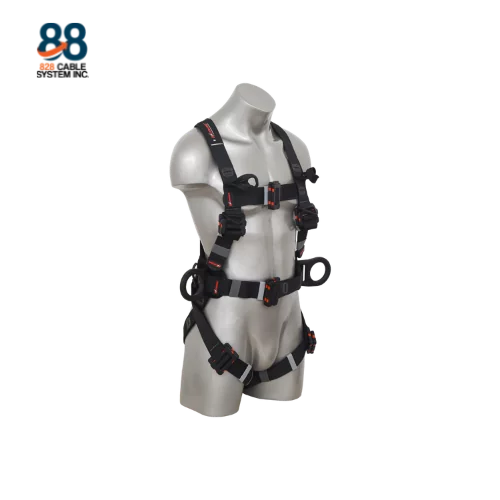
In the world of fall protection, choosing the right harness is crucial for ensuring safety and efficiency. Full-body harnesses and partial harnesses are two primary types of harnesses used in various industries to prevent falls and provide support. Understanding the differences between these two harnesses is essential for making informed decisions about safety gear. This guide will help you explore the features, applications, and benefits of each type, so you can choose the best harness for your needs.
What is Full-Body Harness?
A full-body harness is a comprehensive safety device designed to provide maximum protection by securing the wearer from shoulders to thighs. This harness includes multiple straps and attachment points, such as shoulder straps, leg straps, and a chest strap, which work together to distribute fall forces evenly across the body. Full-body harnesses are commonly used in high-risk industries such as construction, climbing, and industrial work.
Shoulder Straps: Support the upper body and distribute weight evenly.
Leg Straps: Secure the lower body and prevent sliding or shifting.
D-Rings: Positioned on the back or chest for connecting to fall arrest systems or lanyards.
Full-body harnesses are essential for tasks that involve working at heights or in challenging environments where fall protection is a top priority.
What is a Partial Harness?
A partial harness offers selective coverage and support, typically focusing on specific areas of the body. Unlike full-body harnesses, partial harnesses may include only a chest harness or a seat harness, and they are designed for particular applications.
Chest Harness: Provides support around the upper torso and is often used in combination with other safety equipment.
Seat Harness: Focuses on supporting the lower body and is commonly used in activities where the upper body does not need full restraint.
Partial harnesses are suitable for tasks that do not require full-body protection, such as certain climbing activities or specific industrial applications.
Comparing Full-Body Harnesses and Partial Harnesses
Safety Considerations
Full-body harnesses offer comprehensive protection by securing the wearer from head to toe, which is vital for preventing falls and minimizing injury during a fall. They are designed to distribute fall forces across the entire body, reducing the risk of injury.
Partial harnesses, while providing adequate support for certain tasks, offer less coverage and may not be suitable for all fall protection scenarios. They are often used where full-body protection is not necessary, but additional safety measures should be considered.
Comfort and Mobility
Full-body harnesses are designed to offer balanced support, but the multiple straps and attachments can sometimes limit mobility. They are engineered for safety and stability, which may affect comfort during prolonged use.
Partial harnesses generally offer greater freedom of movement and comfort for specific tasks. Their design often allows for easier movement and less bulk, making them ideal for tasks that require agility.
Applications and Suitability
Full-body harnesses are best suited for high-risk environments, such as construction sites, aerial work platforms, and climbing activities where complete fall protection is necessary.
Partial harnesses are appropriate for applications where only upper body or lower body support is needed, such as certain types of climbing or maintenance work where full-body protection is not required.
Choosing the Right Harness for Your Needs
When selecting a harness, consider the following factors:
Job Requirements: Assess the nature of the work and the level of risk involved. Full-body harness are typically required for high-risk tasks, while partial harnesses may suffice for specific applications.
Safety Standards: Ensure the harness meets industry safety standards and regulations.
Comfort: Choose a harness that offers comfort and fits well, especially for extended use.
Consulting with safety experts and evaluating your specific needs will help you make the best choice.
Takeaway
Understanding the differences between full-body harnesses and partial harnesses is essential for selecting the right safety equipment for your needs. Full-body harnesses offer comprehensive protection, while partial harnesses provide targeted support for specific tasks. By considering the safety requirements, comfort, and applications, you can make an informed decision that ensures safety and efficiency in your work environment.